

In today’s fast-paced manufacturing world, efficiency is key. Manufacturers face constant pressure to optimize production and reduce costs.
Inventory management software is a powerful tool in achieving these goals. Modern manufacturing inventory software provides real-time data on stock levels and production needs.
This software helps streamline operations by aligning inventory with actual demand. It reduces waste and minimizes overproduction.
Integrating warehouse management software enhances visibility across the supply chain. It offers better control and coordination of resources.
Real-time tracking capabilities allow quick responses to demand changes. This agility is crucial in a dynamic market environment.
Advanced systems offer demand forecasting tools. These tools predict future inventory needs based on historical data.
Implementing inventory management software can lead to significant cost savings. It reduces excess inventory and associated carrying costs.
Ultimately, this software supports lean manufacturing principles. It optimizes stock levels and reduces lead times, transforming production processes.
Understanding Manufacturing Inventory Software
Manufacturing inventory software is a cornerstone of modern production management. It streamlines operations by providing insights into inventory needs. This allows for better resource allocation and planning.
Such software is designed to enhance every facet of inventory control. From tracking raw materials to monitoring finished goods, it provides comprehensive oversight. Efficient inventory management is thus crucial for meeting production targets.
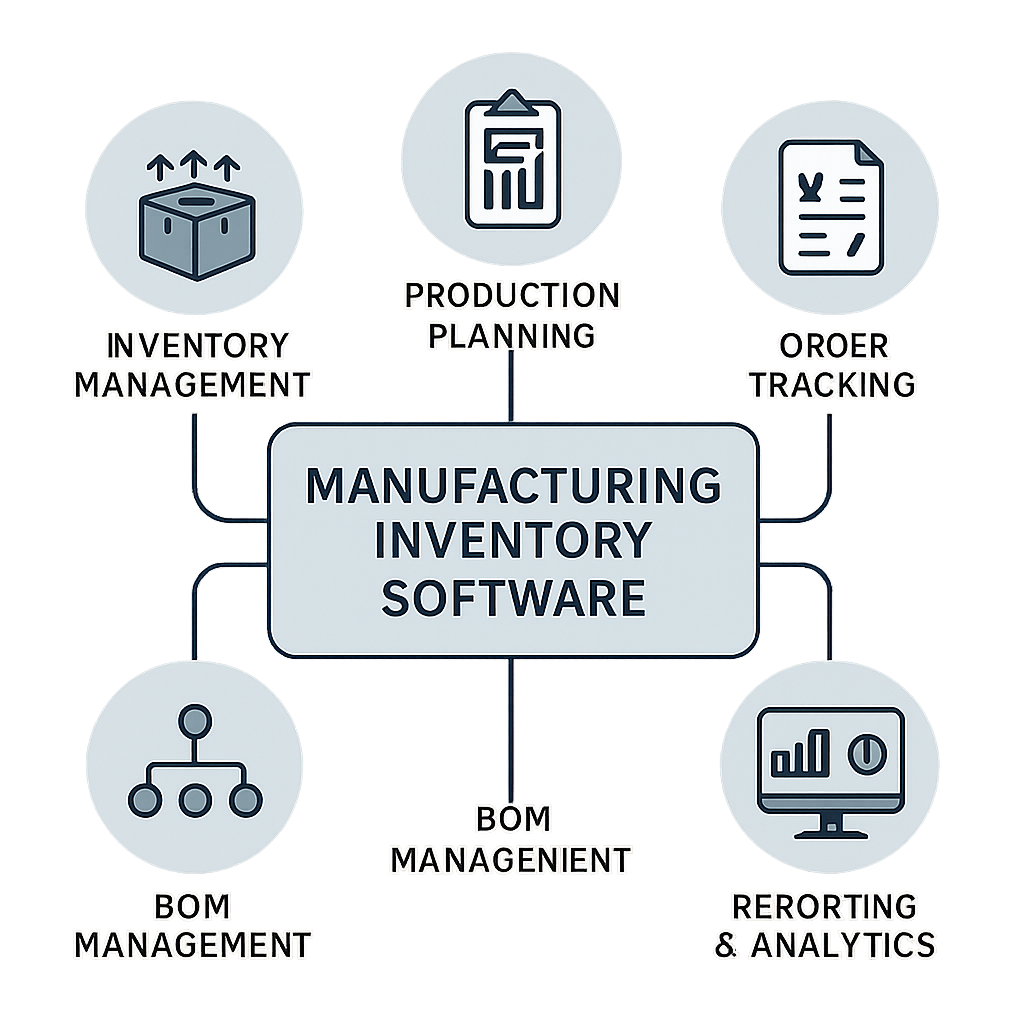
A typical inventory system includes several key components. These systems offer functionalities that support business operations. Core features include:
- Real-time inventory tracking
- Automated reordering processes
- Demand forecasting tools
- Batch tracking and traceability
- Integration with ERP systems
The integration with existing systems is seamless. By syncing with ERP systems, the software offers holistic views of operations. This integration enhances decision-making and strategic planning.
Real-time tracking is another major asset. It allows manufacturers to monitor inventory levels accurately and in real-time. This capability ensures prompt responses to supply chain disruptions or demand fluctuations.
The software also assists in regulatory compliance. Batch tracking features help maintain product quality standards. Compliance with industry regulations becomes more manageable.
Finally, effective inventory management software reduces manual errors. Automated processes minimize human mistakes, boosting accuracy and reliability. By investing in this software, manufacturers not only enhance efficiency but also pave the way for sustained growth.
Key Features of Inventory Management Software for Manufacturers
Inventory management software is essential for today’s manufacturers. It offers a suite of tools tailored to streamline production. Understanding its key features helps maximize efficiency and productivity.
One of the primary features is real-time inventory tracking. This ensures that manufacturers always know inventory levels. It helps prevent both overstocking and stockouts, facilitating smooth operations.
Another crucial feature is automated reordering. By analyzing inventory levels and reorder points, the software triggers purchase orders. This automation reduces manual intervention and ensures timely restocking.
Demand forecasting tools are also integral. They use historical data to predict future inventory needs. This aids in aligning supply with anticipated demand, minimizing waste.
Batch tracking and traceability enhance quality control. These features enable the tracking of products through each production stage. It’s particularly vital for compliance with industry standards and regulations.
Software that integrates with ERP systems is highly beneficial. It consolidates inventory data with financial and operational insights. This integration supports informed decision-making and strategic planning.
Mobile accessibility is an emerging feature. Many systems now offer mobile interfaces, improving accessibility. It allows managers to monitor inventory and make decisions on the go.
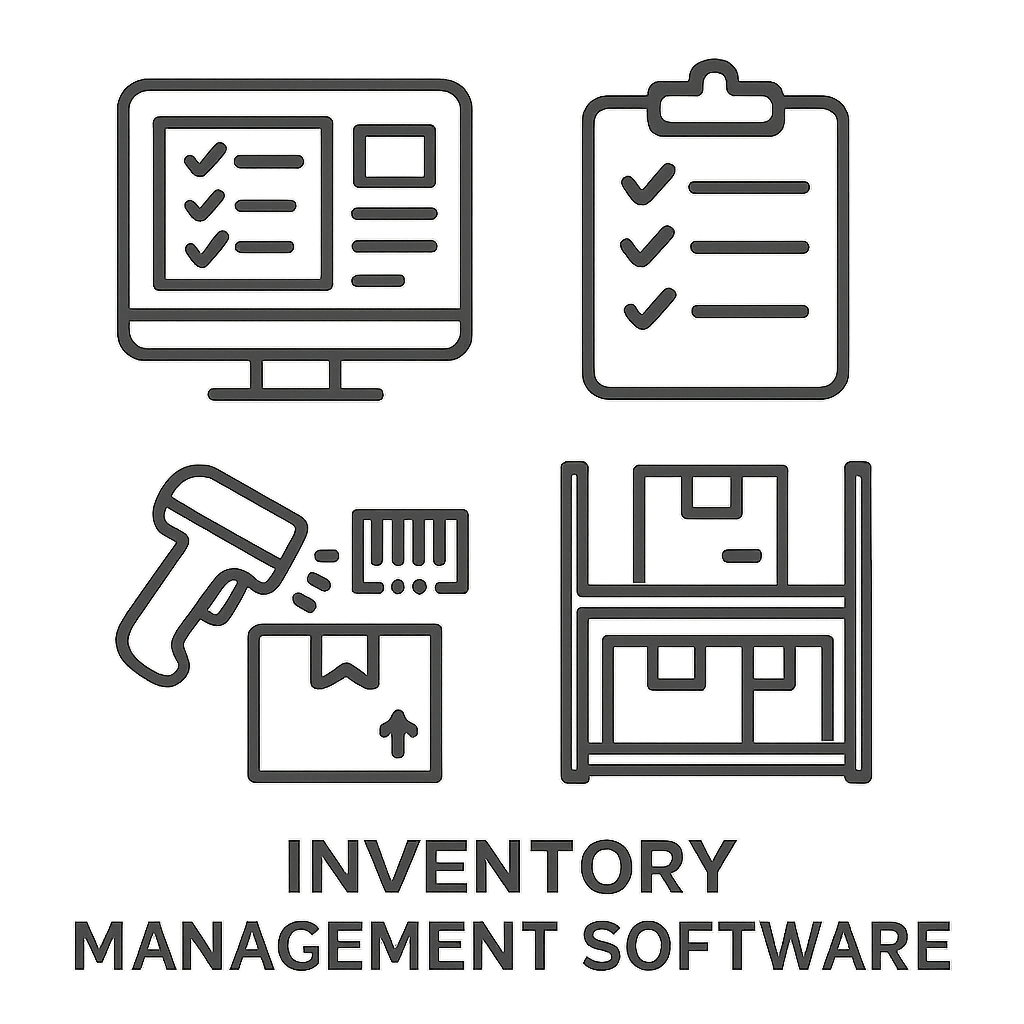
Lastly, reporting and analytics provide valuable insights. They offer data on inventory turnover, shortages, and performance. These analytics help identify trends, optimize processes, and improve stock management.
In conclusion, these features collectively optimize manufacturing operations. They ensure efficient resource use, enhance quality, and support compliance. By leveraging these tools, manufacturers can boost productivity and achieve business goals.
The Role of Warehouse Management Software in Manufacturing
Warehouse management software is vital for modern manufacturing. It optimizes warehouse activities and streamlines processes. This, in turn, enhances overall production efficiency.
The software provides real-time insights into warehouse operations. This visibility aids in monitoring inventory movements. It helps manufacturers quickly identify and resolve stock discrepancies.
Key benefits of warehouse management software include:
- Enhanced inventory control
- Improved space utilization
- Faster order fulfillment
- Reduced labor costs

Integration with other systems is a crucial feature. It allows seamless communication between warehouse and production operations. This integration ensures that inventory data is consistent across all platforms.
Improved order accuracy is another advantage. With advanced tracking capabilities, errors in order picking are minimized. This results in timely deliveries and higher customer satisfaction.
Warehouse management software also supports labor management. It optimizes workforce allocation based on demand. This leads to cost savings and improved productivity.
In summary, warehouse management software is a key component in the manufacturing ecosystem. It ensures smooth operation, enhances accuracy, and supports scalability. By leveraging such software, manufacturers can significantly improve their operational efficiency.
Benefits of Integrating Inventory and Warehouse Management Systems
Integrating inventory and warehouse management systems offers substantial advantages. It creates a unified environment for managing stock and storage. This streamlines operations, reduces errors, and enhances productivity.
With integration, data flows seamlessly between systems. This real-time data access fosters informed decision-making. It empowers manufacturers to optimize stock levels and reduce waste.
Key benefits of integration include:
- Improved inventory accuracy
- Enhanced operational efficiency
- Faster response times to market demands

Through integration, manufacturers achieve better demand forecasting. Accurate stock insights enable better planning and fulfillment. This results in fewer stockouts and overproduction issues.
Additionally, system integration enhances traceability. Manufacturers can track products from production to delivery. This traceability is crucial for compliance and quality control.
Finally, integration supports enhanced customer service. With precise inventory data, manufacturers can meet customer needs more consistently. Faster, accurate order fulfillment improves customer satisfaction and loyalty.
In essence, integrating these systems transforms operational workflows. It fosters efficiency, reduces costs, and supports strategic goals. By leveraging integration, manufacturers gain a competitive edge in a dynamic market.
Real-Time Tracking and Visibility Across the Supply Chain
Real-time tracking enhances supply chain visibility, revolutionizing manufacturing. It ensures data accuracy and quick access to stock information. This immediacy aids in minimizing delays and stock discrepancies.
Manufacturers gain considerable benefits from real-time tracking. Fast responses to supply chain disruptions become possible. As a result, operational agility improves drastically.
Key advantages of real-time tracking include:
- Immediate awareness of stock levels
- Swift detection of supply chain issues
- Enhanced supply chain collaboration

Furthermore, real-time tracking refines coordination among departments. Each team accesses up-to-date information, aligning their activities efficiently. Such synchronization reduces silos and enhances team collaboration.
Additionally, real-time data boosts overall supply chain resilience. Manufacturers can anticipate and manage potential disruptions effectively. This adaptability strengthens supply chain networks and enhances stability.
In summary, real-time tracking is a game-changer for supply chain management. It elevates transparency, ensures efficiency, and supports proactive decision-making. By embracing this technology, manufacturers can optimize their supply chains and bolster performance.
Demand Forecasting and Production Planning
Demand forecasting plays a crucial role in effective production planning. By predicting future demand, manufacturers can optimize resource allocation. This approach reduces excess inventory and avoids stockouts.
Advanced inventory management software offers sophisticated forecasting tools. These tools analyze historical data and market trends. As a result, manufacturers create accurate demand forecasts with ease.
Key benefits of demand forecasting and production planning include:
- Improved inventory turnover
- Enhanced resource utilization
- Minimized production waste

Additionally, demand forecasts support aligning production schedules with market needs. Manufacturers can adjust production levels according to anticipated demand. This flexibility improves responsiveness and reduces lead times.
Moreover, effective production planning enhances customer satisfaction. By meeting demand accurately, manufacturers ensure timely product delivery. Satisfied customers reinforce brand reputation and loyalty.
In conclusion, demand forecasting is vital for efficient manufacturing operations. It optimizes inventory levels and aligns production with actual demand. Utilizing these insights, manufacturers can achieve superior operational efficiency.
Inventory Control: Reducing Waste and Overproduction
Inventory control is pivotal in minimizing waste and overproduction in manufacturing. Effective control ensures inventory levels align closely with actual demand. This reduces costs associated with excess stock and storage.
Implementing inventory management software helps in several ways. It automates tracking processes, providing real-time insights. This data facilitates better decision-making regarding inventory replenishment.
Here are some key inventory control practices:
- Setting optimal reorder points
- Regularly auditing inventory
- Implementing just-in-time inventory systems

By maintaining accurate inventory records, manufacturers reduce discrepancies. Fewer errors occur with automated systems in place. This boosts efficiency and reduces administrative burden.
Moreover, inventory control supports sustainability initiatives. Reducing waste not only saves costs but also benefits the environment. Businesses can thus achieve both economic and ecological goals.
In conclusion, inventory control is crucial for efficient manufacturing. By leveraging technology, manufacturers can effectively balance inventory levels. This leads to cost savings and a more sustainable operation.
Batch Tracking, Traceability, and Compliance
Batch tracking plays a critical role in manufacturing, ensuring that each product can be traced back to its source. This is vital for quality control and compliance with industry standards. By tracking batches, manufacturers can swiftly identify and address defects.
Traceability enhances accountability throughout the supply chain. It ensures that all materials used in production meet quality requirements. This capability is crucial in industries with stringent regulatory compliance needs, such as pharmaceuticals and food.
Key benefits of batch tracking include:
- Improved quality control
- Enhanced recall efficiency
- Compliance with regulatory standards

Compliance is non-negotiable in today’s manufacturing landscape. Failure to comply can lead to costly fines and damage to reputation. With inventory management software, manufacturers can automate compliance processes and generate necessary documentation easily.
In sum, batch tracking and traceability safeguard product quality and legal compliance. Implementing robust systems makes it easier to meet regulatory requirements. This fosters trust and credibility in a competitive market.
Lean Manufacturing and Inventory Optimization
Lean manufacturing focuses on efficiency by minimizing waste without sacrificing productivity. Inventory optimization is a vital component of this approach. When stock levels align with demand, waste is reduced significantly, and resources are used more efficiently.
Effective inventory management software supports lean principles by providing insights into inventory needs. It helps manufacturers maintain optimal stock levels, thus avoiding overproduction or underproduction. The result is a smoother, more predictable production process.
Key elements of lean inventory optimization include:
- Just-In-Time (JIT) inventory practices
- Continuous improvement protocols
- Efficient resource allocation

The Just-In-Time (JIT) approach is central to lean manufacturing. It ensures that materials arrive as needed for production, reducing storage costs and excess stock. This tactic not only saves money but also speeds up production cycles.
Incorporating lean manufacturing with inventory optimization promotes sustainable operations. Companies benefit from reduced lead times and improved quality of goods. As operations become leaner, manufacturers can respond faster to market changes, staying competitive and efficient.
Cloud-Based vs. On-Premise Inventory Management Solutions
Choosing between cloud-based and on-premise inventory management solutions is crucial for manufacturers. Each option comes with its own set of advantages and drawbacks. Understanding these can help businesses make informed decisions.
Cloud-based solutions offer flexibility and scalability. They are often easier to update and require less maintenance. Businesses can access inventory data from anywhere, promoting remote management and collaboration.
In contrast, on-premise solutions provide more control over data security. They may offer faster data processing speeds since they are run on local servers. However, they typically involve higher initial setup costs and require more IT resources.
Key considerations include:
- Cost-effectiveness
- Accessibility and mobility
- Data security

Deciding between these two depends on a company’s specific needs and capabilities. Assessing both options thoroughly ensures that manufacturers select the most suitable system for their operations, balancing efficiency with security needs.
Integrating Inventory Management Software with ERP Systems
Integrating inventory management software with Enterprise Resource Planning (ERP) systems enhances operational efficiency. This synergy offers a comprehensive view of the entire business process. It bridges departments like production, finance, and logistics seamlessly.
Key benefits of integration include streamlined data flow and improved communication. This reduces duplication of effort and minimizes errors. As a result, decision-making becomes more data-driven and precise.
Manufacturers can expect increased visibility of stock levels and production schedules. This integration enables businesses to manage supply chain disruptions more effectively. It ensures production aligns better with demand forecasts and financial planning.
Consider these integration advantages:
- Unified data access
- Improved production planning
- Enhanced resource allocation

Ultimately, integrating inventory software with ERP systems empowers companies to optimize resource use. It helps maintain a balance between supply and demand, fostering a more agile manufacturing environment. This integration can significantly advance a company’s competitiveness in the marketplace.
Implementation: Steps, Challenges, and Best Practices
Implementing inventory management software requires careful planning. Begin by assessing your current processes and identifying specific needs. This helps in selecting the right software tailored to your operations.
One key challenge during implementation is employee resistance to change. Address this by involving them early and explaining the benefits. Proper training can ease the transition and ensure successful adoption.
Another challenge is the integration of new software with existing systems. Compatibility issues can arise, requiring thorough testing. To avoid disruptions, plan for a phased rollout instead of a full-scale launch.
Following these best practices can streamline implementation:
- Conduct a needs assessment
- Involve key stakeholders
- Pilot test the system

Taking these steps ensures that your software solution aligns with your strategic goals. Planning for potential pitfalls and emphasizing training can reduce implementation-related risks. This sets the stage for a more efficient and responsive manufacturing process.
Training and Change Management for Successful Adoption
Effective training and change management are vital for adopting manufacturing inventory software. Providing comprehensive training sessions ensures that employees understand the new system. This boosts their confidence and proficiency with the software.
Change management strategies help manage transitions smoothly. Addressing employee concerns is crucial for fostering a positive work environment. Open communication channels and transparent processes are key aspects of successful change management.
Here are essential training and change management practices:
- Organize hands-on workshops
- Provide continuous support and resources
- Encourage feedback and improvements

Adapting to new technologies can be challenging. Encouraging a culture of learning and adaptation can mitigate resistance. Ultimately, effective training and change management result in a smoother transition and better software utilization.
Measuring Success: KPIs and Analytics in Inventory Management
To gauge the success of manufacturing inventory software, tracking key performance indicators (KPIs) is essential. KPIs provide insights into inventory efficiency and overall performance. Analyzing these metrics helps identify areas for improvement.
Data-driven decision-making relies on accurate analytics. Inventory management software offers detailed reports and visualizations. These tools allow managers to understand trends and optimize stock levels.
Essential KPIs in inventory management include:
- Inventory turnover rate
- Order accuracy and fulfillment rates
- Stockout and overstock frequencies
- Return on investment (ROI)

Utilizing advanced analytics can drive significant improvements. By continually monitoring KPIs, manufacturers can enhance operational efficiency. This leads to cost savings and improved customer satisfaction. Emphasizing analytics helps achieve sustained success and growth in the competitive manufacturing industry.
Choosing the Right Inventory Management Software for Your Manufacturing Business
Selecting the ideal inventory management software is crucial for manufacturing success. Businesses must evaluate their unique needs and challenges. The right choice can significantly enhance production efficiency.
Begin by assessing current processes and identifying pain points. Consider features that address these issues and streamline operations. Compatibility with existing systems ensures a smooth transition and integration.
When evaluating software options, look for:
- Real-time tracking capabilities
- Demand forecasting tools
- Integration with ERP systems
- Scalability and customization options

Additionally, vendor reputation and support services play a vital role. Reliable customer support ensures smooth implementation and problem resolution. Finally, consider future business growth and scalability. Opt for a solution that grows alongside your manufacturing operations. Making the right software choice transforms inventory management and enhances overall production processes.
Future Trends in Manufacturing Inventory Software
The landscape of manufacturing inventory software is rapidly evolving. Emerging technologies and shifting market needs drive continuous innovation. Understanding future trends can help businesses stay competitive.
Artificial intelligence and machine learning are increasingly being integrated. These technologies enhance demand forecasting and decision-making. They also automate routine tasks, improving overall efficiency.
Another trend is the rise of Internet of Things (IoT) devices. IoT enables real-time data collection and monitoring. This results in enhanced inventory visibility and control.
Trends to watch:
- Expansion of cloud-based solutions
- Enhanced mobile access and usability
- Greater emphasis on sustainable and green practices

Remote work trends demand more flexible software solutions. Cloud-based platforms and mobile features support these needs effectively. Keeping an eye on these trends ensures manufacturers are prepared for the future. This positions them well for growth and efficiency improvements in their operations.
Transforming Production with Inventory Management Software
Inventory management software is indispensable for modern manufacturers. It streamlines processes and enhances productivity. Embracing this technology is crucial for remaining competitive.
By implementing robust software systems, manufacturers can align inventory with demand. This minimizes waste and maximizes resources. Efficient stock management leads to cost savings and increased profitability.
Automation and data insights are transformative benefits. They allow quick responses to market changes. Manufacturers can focus on innovation and growth instead of operational hurdles.
Integrating with existing systems, such as ERP, enhances value. This integration promotes a holistic view of business operations. Ultimately, manufacturing inventory software is a pivotal tool for successful production transformation.
Q&A
Question: What problems does manufacturing inventory software solve, and what outcomes can I expect?
Short answer: It aligns stock with real demand through real-time tracking, automated reordering, and demand forecasting, which reduces waste and overproduction. By integrating with existing systems, improving traceability, and minimizing manual errors, it delivers cost savings, shorter lead times, better resource allocation, and stronger adherence to lean manufacturing principles.
Question: How does integrating inventory management software with warehouse management and ERP systems improve operations?
Short answer: Integration creates a unified, real-time view of inventory, production, and financials. This seamless data flow boosts accuracy, streamlines processes, strengthens demand forecasting, and enhances traceability. The result is faster response to market changes, improved production planning and resource allocation, fewer errors, and more consistent, on-time fulfillment for better customer satisfaction.
Question: How do batch tracking and traceability support quality and regulatory compliance?
Short answer: They track materials and products through every production stage back to their source, enabling rapid issue identification and efficient recalls. This strengthens quality control, ensures adherence to industry regulations, simplifies documentation, and helps protect brand reputation—especially critical in regulated sectors like pharmaceuticals and food.
Question: What are the key steps and challenges in implementing inventory software, and how do we drive adoption?
Short answer: Start with a needs assessment, involve key stakeholders, pilot test, and plan a phased rollout with thorough integration testing. Common challenges include resistance to change and system compatibility. Overcome these by communicating benefits early, offering hands-on training and continuous support, and encouraging feedback to refine processes and ensure smooth, confident adoption.
Question: Which KPIs and analytics should we track to measure success?
Short answer: Focus on inventory turnover, order accuracy and fulfillment rates, stockout and overstock frequencies, and ROI. Use the software’s reporting and visualizations to spot trends and optimize stock levels. Consistently monitoring these metrics drives efficiency gains, cost reductions, and improved customer satisfaction.