


Why Customer Satisfaction Survey Software Matters
Decision-makers with procurement intent need robust systems to capture customer sentiment, quantify experience and turn findings into measurable improvements. Customer Satisfaction Survey Software centralizes survey creation, delivery and analysis so teams can measure experience consistently, reduce churn and prioritize product or service investments. For enterprise buyers, selecting the right platform is a strategic choice that affects cross-functional workflows, data architecture and how quickly insight converts to action. This guide offers a practical, governance-focused roadmap for evaluating, procuring and implementing a solution that supports measurable business outcomes.
Key Business Objectives Addressed
Before engaging vendors, clarify the outcomes the program must deliver. Common objectives include:
- Measuring loyalty and satisfaction through NPS, CSAT and CES
- Monitoring experience trends by segment, product line and channel
- Driving operational improvements with closed-loop case management
- Enriching customer records by integrating feedback into CRM and analytics platforms
- Reducing churn and increasing lifetime value through targeted recovery campaigns
- Demonstrating value to executives with quantifiable KPIs and dashboards
Core Features to Evaluate
Not all vendors deliver the same capabilities. Prioritize features that reduce friction for users and accelerate insight-to-action cycles.
Survey Design and Question Types
Evaluate platforms for flexible templates, conditional branching, multi-language support and enterprise-grade branding. The system should capture both quantitative scores and qualitative comments, support randomized question sets for A/B testing and enable custom scoring logic for composite metrics.
Distribution Channels and Timing
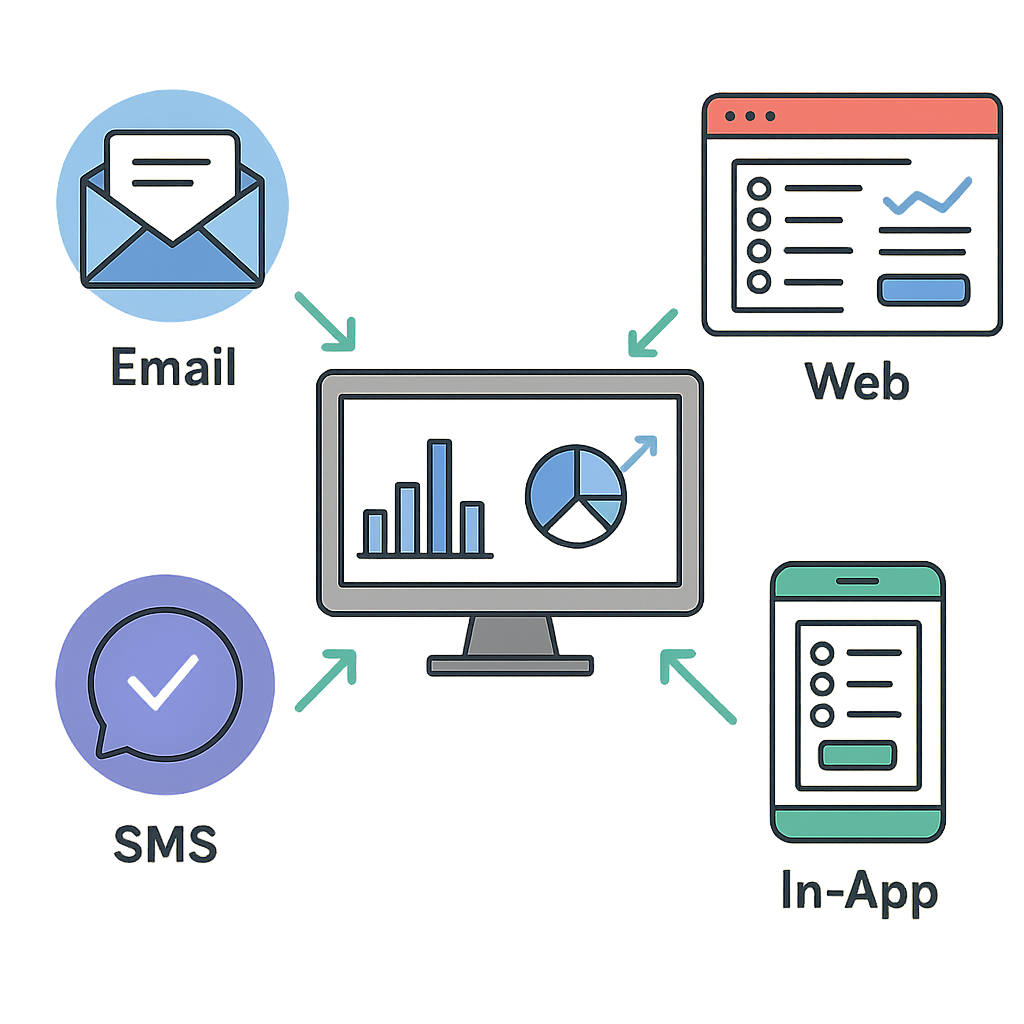
Top solutions support email, SMS, web intercepts, in-app, kiosk and IVR surveys. Assess scheduling controls, retry logic, suppression lists and connector capabilities that allow sending surveys at critical moments across the lifecycle.
Analytics, Dashboards and Insights
Analytics should provide trend dashboards, cohort analysis, segmentation and correlation tools to link feedback with revenue and retention metrics. Look for automated anomaly detection, root-cause correlation and exportable data models that integrate with BI tools.
Closed-loop Case Management
Closed-loop workflows convert feedback into tracked actions: alerting owners, creating cases in helpdesk systems, assigning SLAs and monitoring resolution. Ensure the platform facilitates escalation, audit trails and reporting on remediation outcomes.
Integrations and API Ecosystem
Enterprise deployments require secure, documented APIs and pre-built connectors for CRM, support systems, marketing automation and data warehouses. Verify authentication methods, webhook support and rate limits to estimate integration effort.
Security, Compliance and Data Governance
Confirm vendor compliance with GDPR, CCPA and relevant sector standards. Inspect encryption practices, role-based access controls, audit logging, data retention policies and regional data residency options. For regulated industries, request SOC 2 or ISO 27001 reports.
Types of Solutions and Where They Fit
Understanding product archetypes helps align vendor shortlists with organizational scale and complexity.
Lightweight Survey Tools
These products are cost-effective and fast to deploy for small programs focused on basic satisfaction metrics. They often lack deep integrations, machine learning analytics and enterprise governance features.
Customer Experience Platforms
Full-featured CX suites combine surveys, journey analytics, text mining and action management. They suit mid-market and enterprise organizations that require cross-functional coordination and advanced analytics.
Specialized Score-driven Solutions
Vendors focused on NPS, CSAT or loyalty often provide benchmarking, predictive models and industry-specific templates. Choose these when a particular score is a central strategic KPI.
Embedded Feedback SDKs
Product-led companies often embed SDKs into web or mobile apps to capture contextual, in-session feedback tied to usage events. These require engineering resources but yield high-quality, actionable insights.
Structured Evaluation and Shortlisting Process
A disciplined procurement process reduces selection risk and ensures vendor comparability.
Step 1 — Gather Requirements and Stakeholders
Bring together representatives from CX, support, product, IT, security and legal. Document mandatory features, desired integrations, expected survey volumes and regulatory constraints. Create acceptance criteria for a pilot.
Step 2 — Weighted Scoring Matrix
Create a matrix that assigns weights to categories such as functionality, security, integration complexity, TCO and vendor viability. Use consistent scoring practices during demos to maintain objectivity.
Step 3 — Proof of Concept and Pilot
Run short pilots with two or three vendors to validate integration assumptions, data quality and adoption. A pilot should include realistic volumes, end-to-end integrations and a small closed-loop test to verify operational workflows.
Step 4 — References, SLAs and Roadmap Fit
Request references from similar customers and validate uptime commitments, support SLAs and the vendor roadmap. Confirm their track record on security and enterprise deployments.
Implementation Roadmap and Governance

Successful adoption depends on governance, change management and measurable milestones.
Phase 1 — Governance and Program Design
Define ownership, steering committees, KPIs and data governance. Document how survey results will flow into operational processes and the executive reporting cadence. Clarify responsibilities for question design, translations and compliance.
Phase 2 — Integration and Data Architecture
Map data flows between the chosen platform and CRM, helpdesk, marketing automation and data lakes. Standardize customer identifiers and retention policies. For a transferable enterprise implementation checklist, see the Commercial Property Management Software Implementation Guide, which highlights governance, testing and change management practices applicable across software projects.
Phase 3 — Pilot, Training and Change Management
Conduct a controlled pilot, collect internal stakeholder feedback and iterate on templates. Deliver role-based training for survey creators, analysts and frontline teams. Create internal champions to model usage and share early wins.
Phase 4 — Scale, Automate and Optimize
Expand survey coverage, automate reporting and monitor data quality continuously. Establish quarterly reviews to refine question sets, segmentation strategies and distribution timing based on response analytics.
Integrations That Drive Business Value
Integration choices determine how quickly feedback becomes operationally useful.
- CRM integration for contextual segmentation and routing
- Helpdesk connectors for automated case creation and SLA tracking
- Analytics and BI connectors to correlate satisfaction with revenue and retention
- Marketing automation for targeted follow-ups and recovery campaigns
- HR systems if linking customer feedback to employee coaching or compensation; for broader HR integration considerations see the Free Payroll Software Comparison Guide
Pricing Models and Total Cost of Ownership
Understand subscription fees and the hidden costs that affect total ownership.
Common Pricing Structures
- Per-administrator or per-user licensing
- Volume-based pricing for survey sends or responses
- Tiered subscriptions with feature and integration caps
- Enterprise agreements with tailored terms for high-volume or global deployments
Budget for Hidden Costs
Include implementation services, integration development, data migration, translation services, training and ongoing support in procurement estimates. If embedding feedback into operational workflows or hiring managed services, include those resource costs.
Quantifying Return on Investment
Establish baseline metrics—churn, average order value, support costs—before launch. Typical ROI measures include reduced churn, increased upsell rates, decreased support escalations and improved repeat purchase rates tied to feedback-driven product fixes.
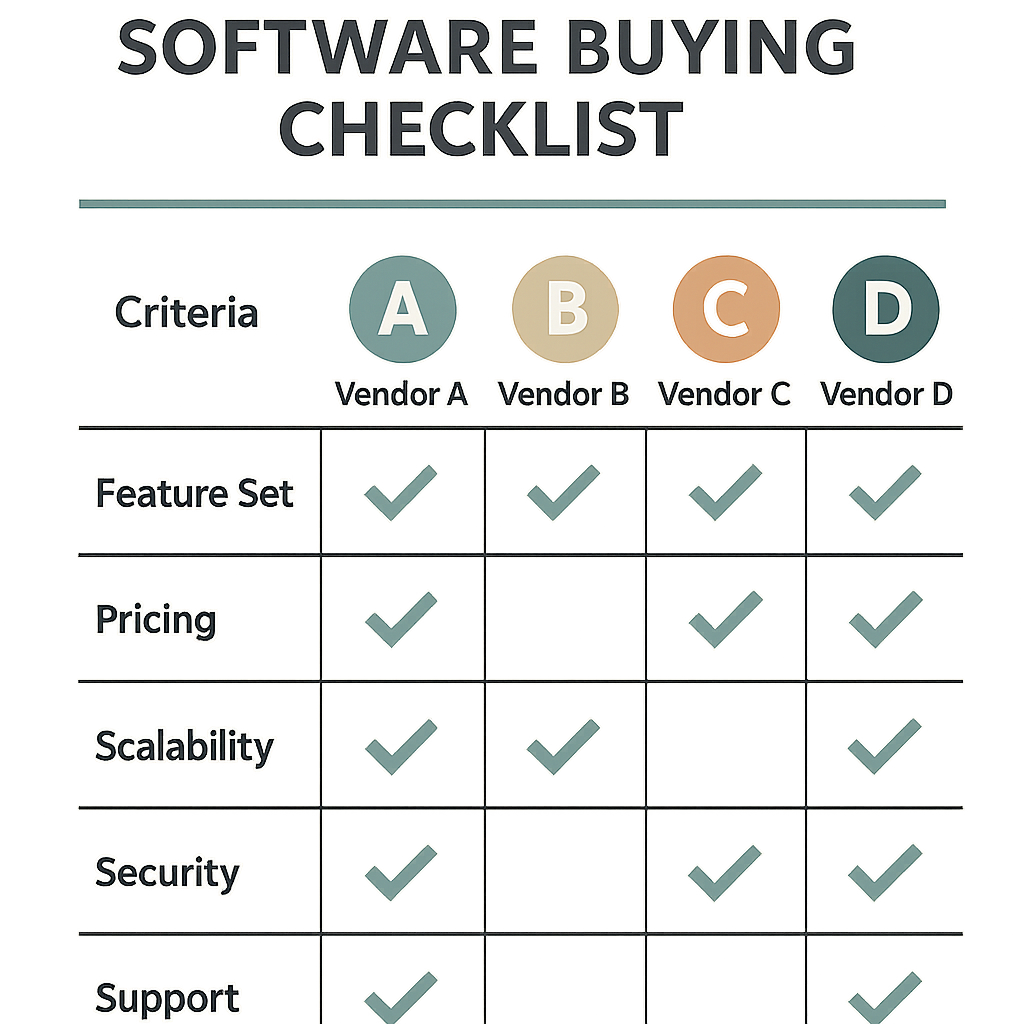
Vendor Selection Checklist
Use this checklist to compare suppliers during procurement and negotiation:
- Does the platform support the survey types and question formats you require?
- Are distribution channels flexible enough to reach customers at key moments?
- Can integrations be delivered within your timeline and budget?
- Does the solution provide text analytics, topic modeling and sentiment scoring?
- Are SLAs transparent and does the vendor demonstrate financial stability?
- Are security controls, compliance and data portability clearly documented?
- What professional services, onboarding and support packages are available?
Operationalizing Feedback
Collecting responses is not the endpoint. Operational processes are required to convert feedback into measurable improvements.
Create Playbooks for Common Responses
Develop scripted workflows for detractors, passives and promoters with defined escalation paths. Align SLAs to case types and publish playbooks so responders act consistently.
Promote Cross-functional Collaboration
Feedback often requires product, operations and support teams to collaborate. Use shared dashboards, integrated tickets and recurring working sessions to keep work visible and accountable.
Leverage Automated Text Analytics
Use automated classification, sentiment scoring and topic extraction to surface recurring issues. Combine machine tagging with periodic human reviews to tune models and address domain-specific language.
Common Implementation Challenges and Mitigation Strategies
Anticipate pitfalls and plan mitigations early in the project lifecycle.
Poor Response Rates
Mitigation: Optimize timing, personalize invitations and keep surveys concise. Use channel-specific best practices, avoid survey fatigue through suppressions and consider modest incentives for low-frequency touchpoints.
Fragmented or Low-quality Data
Mitigation: Standardize customer identifiers, enforce integration patterns and apply validation rules. Monitor for duplicates, incomplete records and apply enrichment where needed.
Insufficient Actioning
Mitigation: Define ownership, SLAs and closed-loop workflows that assign owners and require status updates until resolution. Report on remediation outcomes and tie actions to performance metrics.
Case Studies and Practical Use Cases
Corporate examples illustrate how feedback programs generate value:
- Support teams route low CSAT responses to specialized agents, reducing repeat contacts and average handle time
- Product teams use contextual, in-app feedback to prioritize bug fixes that improve retention metrics
- Account managers identify promoters for targeted upsell campaigns, increasing expansion revenue
Procurement and Contracting Guidance
Negotiate terms that protect your data and minimize vendor lock-in.
Contract Elements to Insist On
- Clear SLAs for uptime, incident response and support escalation
- Data ownership, export formats and timelines for data extraction
- Security attestations and third-party audit reports
- Termination assistance and transition support for migration to another provider
- Pricing caps for growth and clear definitions of usage metrics
Proof Points and Exit Planning
Request migration playbooks and sample exports during procurement. Validate API access and confirm the portability of raw response data and metadata to avoid operational disruption on termination.
Training, Adoption and Change Management
Adoption is primarily a people challenge. Invest in training, internal communications and visible metrics to sustain momentum.
Role-based Training
Deliver specific modules for survey designers, analysts and frontline staff. Provide quick-reference materials and recorded sessions for new hires.
Internal Advocacy and Success Stories
Create internal champions and regularly publish concise case studies that show how feedback led to product fixes, support improvements or revenue gains. Celebrate wins to reinforce program value.
Advanced Capabilities for Enterprise Buyers
Large organizations should evaluate advanced features that scale the strategic value of feedback.
Predictive Analytics and Churn Risk Scoring
Combine survey responses with behavioral and transactional data to build models that predict churn and identify upsell opportunities. Validate model performance and maintain feature engineering pipelines.
Voice of the Customer Programs and Governance
Establish formal VOC governance: program cadence, executive dashboards and cross-functional councils to prioritize initiatives and track impact over time.
Embedding Feedback in Employee Performance
When appropriate, map customer satisfaction indicators to frontline KPIs and coaching programs. Create safeguards to prevent unintended consequences and ensure fairness in performance assessments. For planning around service delivery and professional services automation, review the Psa Software Psa Software Buying Guide, which outlines vendor selection and integration considerations relevant to service teams.
Frequently Asked Questions
How do I choose between a lightweight tool and a full CX platform?
Decide based on scale, integration needs and governance requirements. Lightweight tools are suitable for small programs with limited integrations. If you require enterprise-grade analytics, journey mapping and automated actioning, invest in a CX platform that supports your long-term roadmap.
Which KPIs should be tracked after deployment?
Track NPS, CSAT, CES, response rate, closed-loop resolution time, and the correlation between satisfaction metrics and churn or revenue. Include operational KPIs such as time-to-response and remediation completion rate.
How can we ensure high response quality?
Keep surveys concise, align questions with recent interactions and offer channel choice. Segment audiences to reduce fatigue, apply sampling strategies and monitor completion patterns to refine cadence.
Is automated text analytics reliable?
Modern NLP models reliably categorize common themes but require tuning for industry-specific terms and multilingual support. Combine automated tagging with periodic human audits to maintain accuracy.
What are typical data privacy concerns?
Customers may be concerned about identifiability and secondary uses of feedback. Ensure consent handling, anonymization where required, clear privacy notices and timely responses to data subject requests.
Practical Tools and Templates (Examples)
To accelerate procurement and implementation, consider these practical templates and approaches:
- Weighted scoring template: assign 30% to functionality, 25% to security/compliance, 20% to integration effort, 15% to TCO and 10% to vendor stability
- Pilot design checklist: define objectives, sample size, integration scope, success criteria and timeline (typical pilot: 6–8 weeks)
- SLA checklist: uptime target, incident response times, availability of support tiers and escalation paths
Sample Pilot Plan

A concise pilot plan helps validate assumptions and surface implementation risks early.
- Week 0–1: finalize pilot scope, stakeholders and success metrics
- Week 2: configure platform, set up templates and translations
- Week 3–4: integrate with CRM and helpdesk for end-to-end flow
- Week 5–6: run live surveys to a representative sample and monitor response rates
- Week 7–8: close-loop a subset of low-scoring responses and measure remediation times
- Post-pilot: review results, score vendor against matrix and make procurement decision
Vendor Questions to Ask in Demos
Structured demos reveal how products behave in real scenarios. Key questions include:
- Can you demonstrate an end-to-end NPS or CSAT workflow including alerting and case creation?
- What authentication and encryption standards do you support?
- How do you handle data residency and deletion requests?
- Show examples of text analytics output and explain customization options
- What pre-built connectors exist for CRM, BI and helpdesk tools?
- Provide sample export files and API docs for review by engineering
Final Steps for Buyers
Begin by documenting objectives, mapping journey touchpoints and creating a shortlist using the selection checklist above. Run targeted pilots to validate operational and technical assumptions before full rollout. Prioritize governance, integration and training to shorten the time to value.
Organizations that align measurement with action, enforce data governance and integrate feedback across systems will accelerate value realization and strengthen long-term customer relationships. Thoughtful procurement and implementation practices ensure the chosen Customer Satisfaction Survey Software supports both immediate needs and future enterprise requirements.